
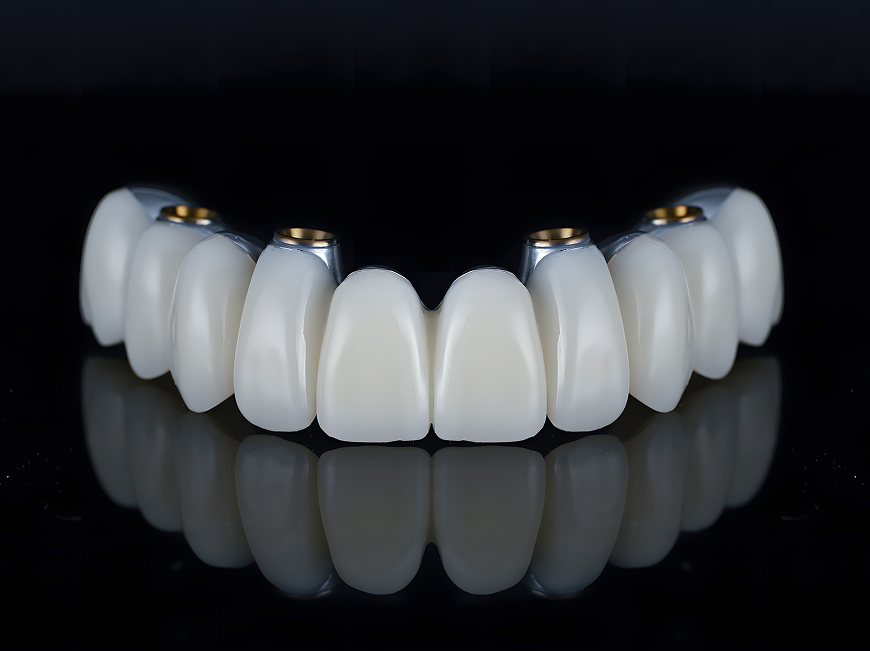
All-on-4 and All-on-X replace an entire arch of missing or failing teeth with a fixed bridge anchored to a small number of implants, rather than a removable denture. Every case begins with a CBCT 3D scan so implant position, angulation, and the number of implants needed ("X") are planned around your actual bone anatomy, not guessed at chairside.
For most patients, the day of surgery ends with a temporary fixed bridge already in place — not a gap, and not a removable appliance to take in and out during healing. The permanent bridge follows once the implants have fully integrated with the bone, typically several months later.
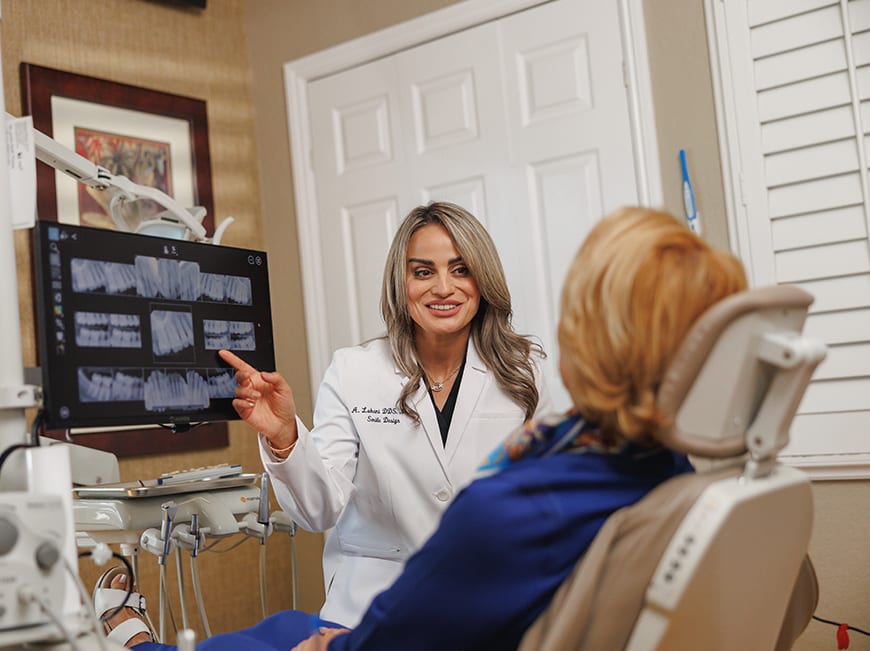
A CBCT scan at consultation is what actually determines candidacy — including how many implants your case needs and whether grafting comes first.
A 3D scan maps your bone volume and anatomy; implant position and number ("X") are planned digitally before surgery.
4–6 implants per arch are placed, with rear implants typically angled to maximize contact with available bone.
In most protocols, a temporary full-arch bridge is attached the same day — you leave with fixed teeth, not a gap.
Implants fuse with the jawbone. You function on the temporary bridge during this period, with scheduled check-ins.
Once integration is confirmed, the temporary is replaced with the definitive full-arch bridge.
Total cost depends on the number of implants placed per arch, whether bone grafting is needed first, and the type of final bridge chosen. Dental insurance often contributes toward diagnostic imaging and portions of the restorative work, though coverage for the implants themselves varies significantly by plan — we verify your benefits and provide an itemized estimate at your consultation.
We treat All-on-X patients from throughout Lake Forest as well as Mission Viejo, Irvine, and Foothill Ranch. Every case follows the same CBCT-planned protocol described above, regardless of where you're coming from.