
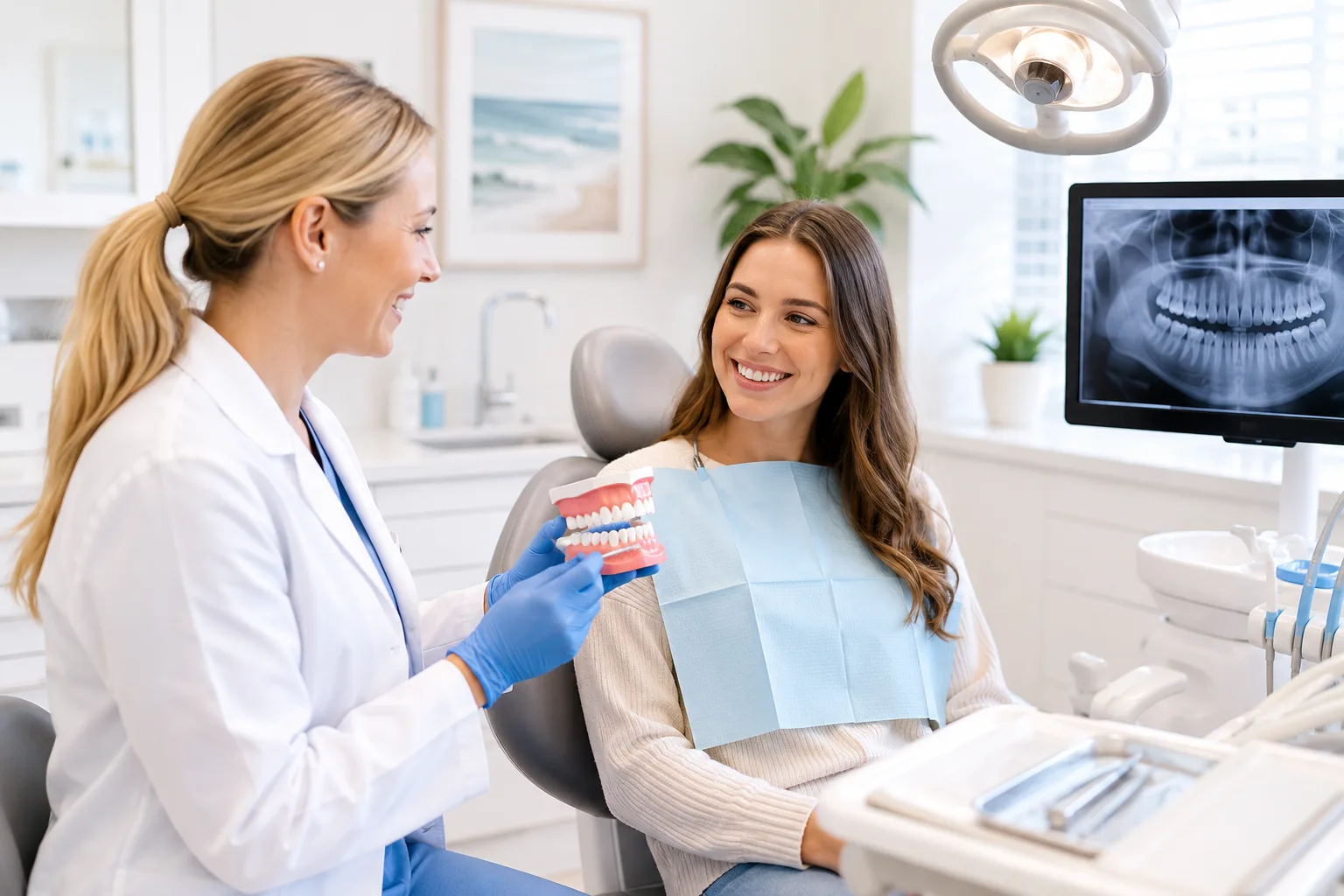
Missing teeth can affect much more than appearance. They may make it harder to enjoy certain foods, speak clearly, or smile confidently in social situations. Fortunately, today’s dentures offer more natural-looking and personalized options than many patients expect.
For people researching dentures in Lake Forest, CA, understanding the available choices is an important first step. Depending on how many teeth are missing, the condition of the gums and remaining teeth, and personal preferences, a dentist may discuss full dentures, partial dentures, immediate dentures, or an implant-supported restoration.
This guide explains how those options differ, what the treatment process may involve, and how patients can protect their comfort and oral health after receiving a new denture.
This article provides general educational information and is not a diagnosis or a substitute for an examination by a qualified dentist. A dental consultation is necessary to determine which tooth-replacement option is appropriate for an individual patient.
What Are Dentures?
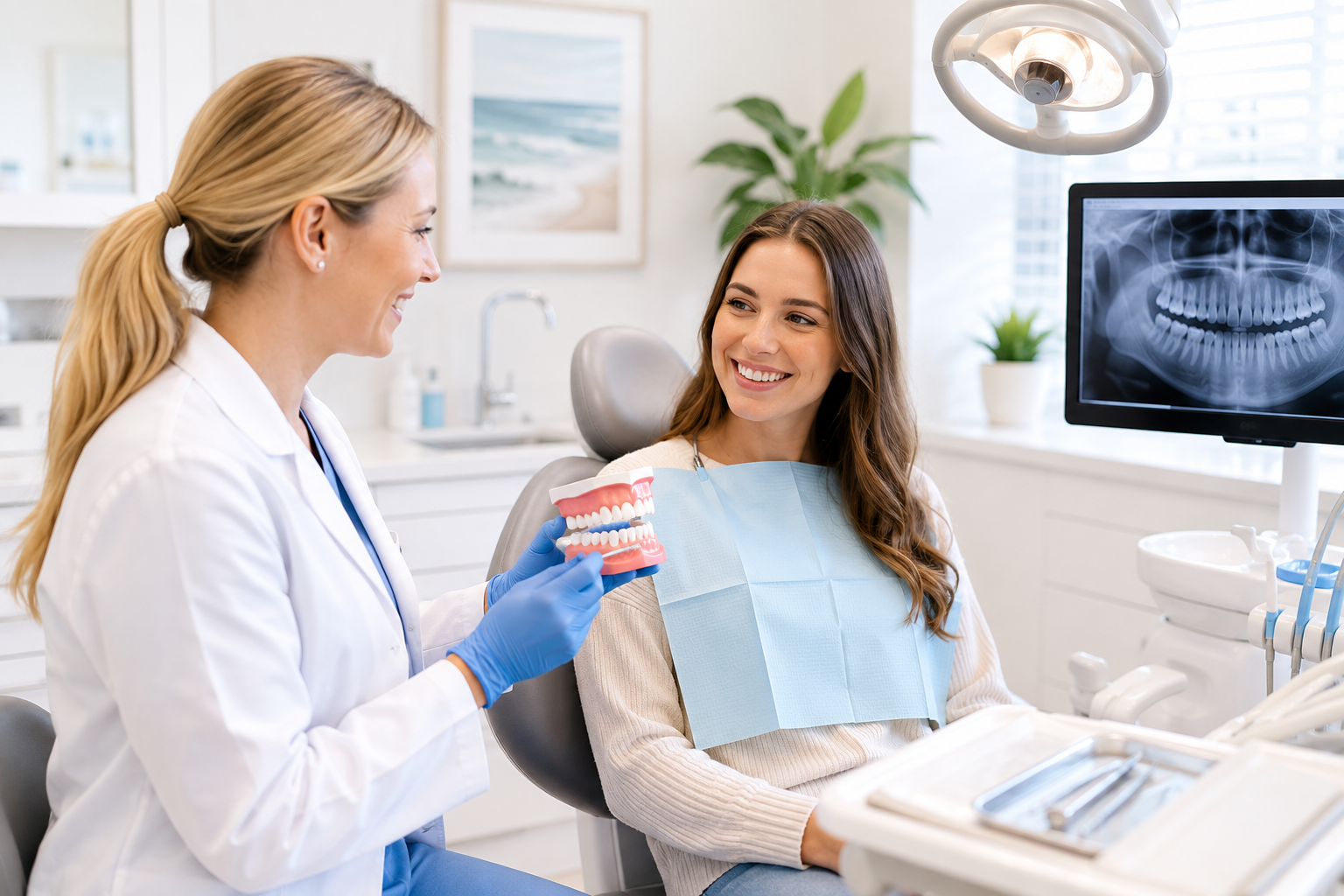
Dentures are custom dental appliances designed to replace missing teeth and some of the surrounding gum tissue. Depending on the design, they can replace several teeth or an entire upper or lower arch.
Although people sometimes picture dentures as bulky or artificial-looking, modern appliances can be shaped and shaded to complement a patient’s face, gums, and smile. Careful planning matters because a denture must do more than look attractive. It also needs to support everyday functions such as speaking and chewing while fitting comfortably against the mouth.
Dentures are usually removable, although certain restorations can connect to dental implants for added stability. The best design depends on the patient’s oral health, anatomy, goals, budget, and willingness to maintain the appliance.
Types of Dentures Patients May Consider
Complete dentures
A complete, or full, denture replaces all teeth in the upper arch, lower arch, or both. It rests on the gums and is made to resemble a complete row of natural teeth.
An upper denture generally covers part of the roof of the mouth, while a lower denture has a horseshoe shape that leaves room for the tongue. Because the lower jaw provides less surface area for support, some patients notice that a lower denture feels less stable than an upper one. Fit, muscle coordination, saliva, and the shape of the jaw can all influence stability.
Partial dentures
A partial denture may be appropriate when a patient still has healthy natural teeth. It fills the open spaces created by missing teeth and commonly uses a framework or clasps to gain support from nearby teeth.
Partial dentures can improve the continuity of the smile and help distribute chewing pressure. However, the remaining natural teeth need ongoing preventive care because they play an important role in supporting the appliance.
Immediate dentures
An immediate denture is placed shortly after selected teeth are removed, allowing the patient to avoid spending the initial healing period without teeth. The appliance is prepared in advance using measurements and records taken before the extraction appointment.
Immediate dentures can offer social and cosmetic convenience, but they often require adjustments. The gums and jaw naturally change shape as the extraction sites heal. As a result, the original fit may become looser, and the dentist may recommend temporary adjustments, relining, or eventually making a replacement denture.
Implant-supported dentures
Implant-supported dentures connect to dental implants placed in the jaw. Depending on the design, a patient may remove the denture for cleaning, or a dentist may secure the restoration so that only a dental professional removes it.
Implants can improve retention and reduce unwanted movement, particularly for some lower dentures. They also require adequate oral health, careful planning, healthy supporting tissues, and a commitment to maintenance.
Implant treatment includes several distinct stages. Early post-procedure symptoms are not the same as soft-tissue healing, and neither should be confused with osseointegration—the biological process through which bone connects with the implant surface. Completion of the final restoration is another separate milestone. The timing of each stage varies with the treatment plan, anatomy, health history, and healing response, so a dentist should provide an individualized schedule. Research discussing implant surfaces and osseointegration also illustrates why implant planning and healing cannot be reduced to a single universal timeline.
How a Dentist Plans a Denture
A successful denture begins with a thorough evaluation rather than simply taking an impression. The dentist may examine the gums, jaw, bite, remaining teeth, existing dental work, and areas that feel sore or unstable. Dental images may be needed to assess structures that cannot be seen during a visual examination.
The appointment is also an opportunity to discuss practical concerns. Patients should mention the foods they find difficult to eat, changes in speech, previous denture problems, dry mouth, a sensitive gag reflex, and any anxiety about dental care.
When implants are being considered, three-dimensional imaging may help evaluate the jaw and nearby anatomy. Dr. Lakani Dental Care reports using digital X-rays and 3D cone-beam CBCT imaging at its Lake Forest office to support treatment planning. The specific tests required still depend on the individual case.
Once the dentist understands the patient’s needs, planning may include impressions or digital records, bite measurements, tooth-shade selection, and a preview or trial arrangement. These steps help establish the position, size, and appearance of the replacement teeth before the final appliance is completed.
What New Dentures Feel Like
A new denture may initially feel unfamiliar, even when it fits properly. The tongue, lips, and cheek muscles need time to adapt to a different shape inside the mouth. Some patients notice temporary changes in speech or increased saliva while adjusting.
Starting with soft foods and small bites can make the transition easier. Food should be divided between both sides of the mouth when possible rather than chewed entirely on one side. Reading aloud may also help a patient practice words that initially sound different.
Mild pressure awareness can occur during adaptation, but persistent pain should not be ignored. A dentist can identify pressure points and make precise adjustments. Patients should not file, bend, or reshape a denture at home, as this can damage the appliance and worsen its fit.
Keeping Dentures and the Mouth Clean
Dentures need daily care even though they cannot develop cavities like natural teeth. Plaque, food debris, and stains can still collect on their surfaces.
- Rinse the denture after meals when practical.
- Brush it gently with a denture brush and an appropriate denture cleanser.
- Avoid abrasive household cleaners and very hot water, which may scratch or distort the appliance.
- Clean the gums, tongue, and roof of the mouth with a soft toothbrush or other method recommended by the dentist.
- Keep removable dentures moist when they are not being worn, following the dentist’s instructions for the specific material.
- Clean around clasps, remaining teeth, or implant attachments carefully.
Patients should follow individualized instructions about overnight wear. In many cases, removing a denture for part of the day gives the tissues a break and provides an opportunity for cleaning, but certain immediate or medically directed situations may require a different routine.
Why Denture Checkups Still Matter
Dental visits remain important after natural teeth have been lost. The dentist can evaluate the gums and other oral tissues, examine remaining teeth or implants, assess the bite, and check whether the appliance has worn or become unstable.
The mouth also changes over time. A denture that once fit well may gradually loosen as the supporting tissues and jaw contours change. Adhesive may help in selected situations, but it should not be used to conceal an ongoing fit problem.
Patients should arrange an evaluation if they develop repeated sore spots, cracks at the corners of the mouth, difficulty chewing, looseness, damaged clasps, a cracked appliance, or an oral sore that does not improve. A broken denture should be professionally repaired rather than fixed with household glue.
What Affects the Cost of Dentures in Lake Forest, CA?
Denture fees vary because treatment is personalized. Important factors can include whether the patient needs a partial or complete denture, the materials and design selected, the condition of the remaining teeth, extractions or preparatory care, laboratory work, and whether implants are included.
Immediate dentures may also involve follow-up adjustments or relining as the mouth heals. Implant-supported treatment generally has additional costs for imaging, surgery, implant components, and the final restoration.
Dental insurance benefits differ significantly between plans. Before treatment, patients can ask for a written estimate that separates the stages of care and identifies what insurance is expected to cover. They should also ask whether follow-up adjustments, relines, or maintenance are included. Any estimate remains subject to the clinical findings and the terms of the patient’s insurance plan.
Frequently Asked Questions About Dentures
Will dentures look natural?
Modern dentures can be customized for tooth color, shape, size, and arrangement. The gum-colored base can also be selected to blend with the patient’s appearance. Results vary, but careful planning aims to create a balanced smile rather than a one-size-fits-all look.
Can a patient eat normally with dentures?
Many patients regain useful chewing function, but adapting takes practice. Starting with softer foods, taking smaller bites, and chewing on both sides can help. Very hard, sticky, or tough foods may remain challenging, depending on the denture’s stability and the patient’s oral anatomy.
Do dentures require adhesive?
Some patients use a small amount of adhesive for added confidence, while others do not need it. Adhesive cannot correct a poorly fitting or damaged appliance. A dentist should evaluate a denture that suddenly requires much more adhesive than before.
How long do dentures last?
There is no single replacement schedule for every patient. Wear, accidental damage, oral changes, hygiene, and changes in the jaw all affect longevity. Regular examinations help determine whether an adjustment, reline, repair, or replacement is appropriate.
Are dentures or implants the better choice?
Neither option is automatically best for everyone. Traditional dentures avoid implant surgery and may have a lower initial cost. Implant-supported restorations may offer greater stability but require additional procedures, maintenance, suitable anatomy, and a larger investment. A clinical examination helps clarify the tradeoffs.
Can existing dentures be adjusted if they hurt?
Often, a dentist can relieve specific pressure areas or recommend a reline when the fit has changed. However, an appliance that is significantly worn, damaged, or no longer matches the mouth may need replacement. Patients should avoid attempting adjustments themselves.
Finding the Right Tooth-Replacement Plan in Lake Forest
Choosing a denture is a personal decision. Comfort, appearance, stability, maintenance, health needs, and budget should all be part of the conversation. A careful examination can also reveal whether remaining teeth can be preserved or whether another restorative approach deserves consideration.
Patients exploring dentures or other tooth-replacement options can contact Dr. Lakani Dental Care in Lake Forest, CA, to ask questions and request a consultation. The practice is located at 23321 El Toro Road, Suite B, Lake Forest, CA 92630. A personalized visit can help patients understand their options and take the next step toward a comfortable, functional smile.